Gratitude Vision Board: Ideas, the Two-Column Board and a Thanksgiving Round
A board for what you already have and what you are walking toward.
Key takeaways
- What is a gratitude vision board? A vision board that holds what you are already thankful for as well as what you want.
- What do you put on a gratitude board? Photos from five areas, people, body, home, work and small days, with one short line in your own words under each.
- Can a vision board have gratitude and goals together? Yes. Split it into two columns: "Already here" for what you are grateful for and "On its way" for your goals.
- Does gratitude journaling actually help? In Emmons and McCullough's 2003 study, people who listed what they were grateful for each week felt better about their lives than people who listed hassles or ordinary events.
- How is it different from a gratitude journal? A journal is words you write and close.
A gratitude vision board holds two things at once: what you are already thankful for, and what you are walking toward. Real photos of the good things in your life sit next to pictures of the life you want. You end up looking at both, instead of only at what is still missing.
What a gratitude vision board is
It is a vision board with a second job. Besides your goals, it holds the people, places and small moments you are glad to have right now. The things on it are already true, so looking at it feels like recognition.
Most boards are built only from what is missing. That can feel exciting for a week and then start to read like a list of everything you have not done yet. Adding what is already good gives the board a floor to stand on.
It is also not the same as a gratitude journal. A journal is words you write and close. A board is pictures you leave out, so you see them without deciding to. The two work well together: /blog/gratitude-journal-for-manifestation covers the writing side, and our future self journaling prompts at /blog/future-self-journaling-prompts look one, five and ten years ahead.
Gratitude board ideas
Pick from five areas: people, body, home, work and small days. Two or three pictures per area is plenty. Use your own photos where you can, because a picture from your own life carries a memory that a stock image never will.
People
A photo with the friend who always calls back. A card in your parent's handwriting. The group chat that made you laugh out loud. Words for the board: "The people who stayed."
Body
Your shoes at the top of a long walk. A plate you cooked. A plain picture of you resting. Words for the board: "This body carried me through the year."
Home
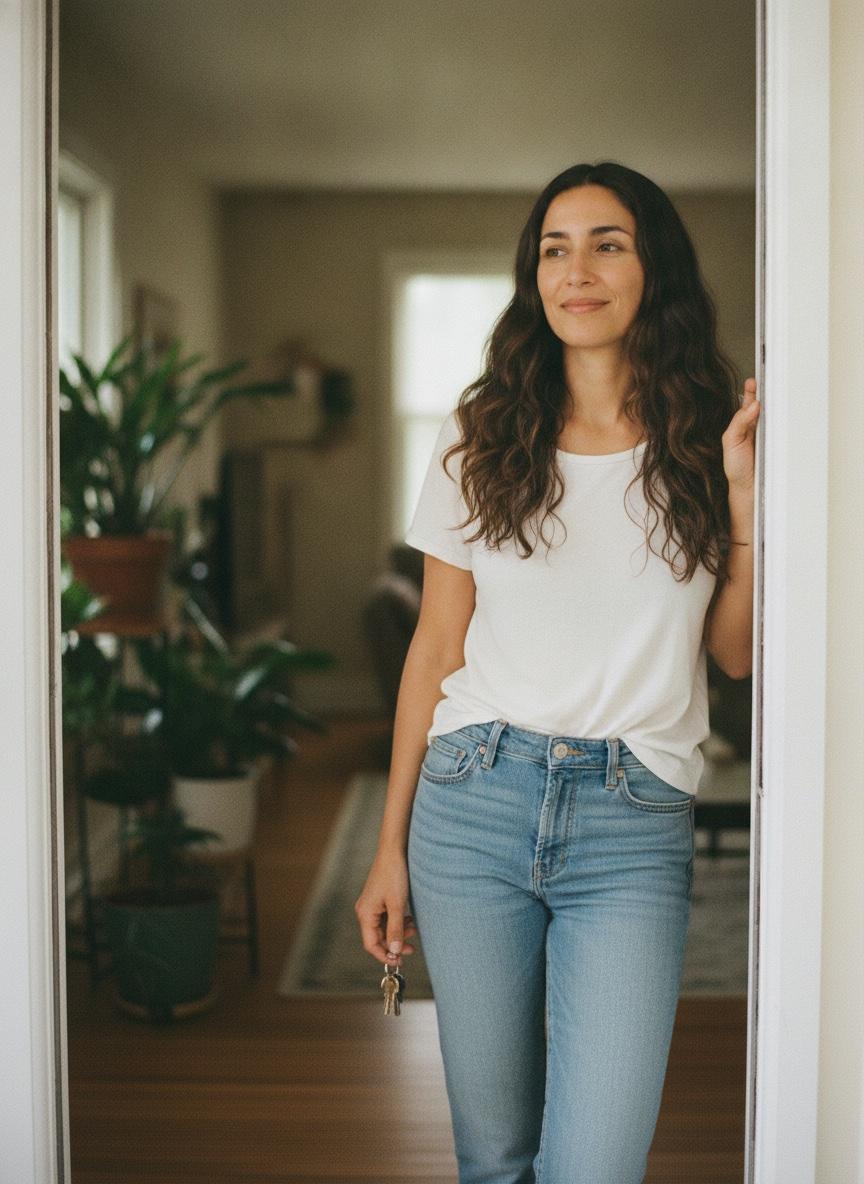
The window where the morning light comes in. The plant that survived. The key to the place you live now. Words for the board: "A door I get to come home to."
Work
The first payment for something you made. A thank-you note from a coworker or client. The desk where you finish things. Words for the board: "I did work I am proud of."
Small days
Coffee on a slow morning. A ticket stub. Rain on the window on a day off. Words for the board: "Ordinary days counted too."
Want a quote on the board? Write one line in your own words instead of borrowing a famous one. A sentence you wrote about your own year will still mean something to you in March.
Already here, on its way: the two-column board
Split the board into two columns. On the left, "Already here": real photos of what you are grateful for today. On the right, "On its way": scenes of you in the life you are walking toward. The same person is in both, so the gap reads as a road, not a verdict.
If you work with a future self visualization script, you may know a specific sad feeling: you picture her doing the thing, and then you notice you are not there yet. The two columns give that feeling somewhere to go. The left side shows you have already reached things you once only wanted. The right side shows the next ones. You look across and see one person at two points in time.
Three on the left
Pick three real photos for "Already here". Things that are true today, not things you hope for.
Three on the right
Pick three scenes for "On its way", one for each area you are working on. Scenes of you doing something, not objects.
Pair them
Where you can, match a left photo with a right scene from the same area: the small apartment you love next to the home you are saving for.
One step under each scene
Under each "On its way" picture, write one thing you can do this week. The picture points the way; the step moves you.
The right column works best when the person in the scenes is clearly you. A stranger from a stock photo keeps the future at arm's length. On /see-your-future-self you upload one selfie and see yourself in a future scene, so both columns show the same face.
A two-minute round for the Thanksgiving table
Go around the table once. Each person says one thing they are grateful for this year and one thing they are walking toward in 2027. Each answer becomes one picture on that person's board: the first on the left, the second on the right.
Keep it short and keep it optional. Anyone can pass, and nobody comments on another person's answer except to say thank you. Have one person jot the answers down as people talk, so nothing gets lost after dessert.
Hosting a board night later in the season? The same round works as the opening activity, and /tools/vision-board-party-kit has a plan for the whole evening.
What the research tested, and what it didn't
One early study on this is Emmons and McCullough's 2003 paper, "Counting Blessings Versus Burdens". It tested writing gratitude lists, not vision boards. People who listed what they were grateful for felt better about their lives than people in the comparison groups.
In the first of three studies in Emmons and McCullough's 2003 paper in the Journal of Personality and Social Psychology, undergraduates filled in a weekly report across one academic quarter. One group wrote down up to five things they were grateful for each week, another listed hassles, and a third listed ordinary events. The gratitude group rated their life as a whole more favorably, and felt more optimistic about the week ahead, than the other two groups. In that same first study, the gratitude lists did not change overall positive or negative mood.
Across the three studies, the authors found gains on several measures, though not all. Nobody in them made a board. So the reading is narrow: noticing and writing down what you are grateful for was linked to feeling better about life. We found no study that tests a gratitude vision board itself, and nothing shows that a board makes a goal happen. Use it to keep both columns in view, and take the step under each picture.
Where to keep it
Keep it where you already look many times a day: your phone lock screen, your laptop wallpaper, or the wall by the mirror. A board in a drawer gets made once and forgotten. A board on your lock screen stays in front of your eyes.
Made it on paper? Take a photo and set that as your lock screen too. Once a month, when something on the right comes true, move it to the left and add a new scene on the right. If you want one short line to say when you look at it, /tools/mantra-generator helps you write a personal mantra.
See your "on its way" scenes with your own face
Stop straining to picture your future self. Meet your future self instead: upload one selfie and see yourself in a future scene, living it, with your own face. See my first scene, free, at /see-your-future-self. First scene free. The board is $4.90 once, and nothing renews. Put your real photos on the left and your scenes on the right, and the whole board is you.
Frequently asked questions
helpWhat is a gratitude vision board?
A vision board that holds what you are already thankful for as well as what you want. Real photos of good things in your life sit next to pictures of where you are heading.
helpWhat do you put on a gratitude board?
Photos from five areas, people, body, home, work and small days, with one short line in your own words under each. Two or three pictures per area is enough.
helpCan a vision board have gratitude and goals together?
Yes. Split it into two columns: "Already here" for what you are grateful for and "On its way" for your goals. Keep the same person, you, in both.
helpDoes gratitude journaling actually help?
In Emmons and McCullough's 2003 study, people who listed what they were grateful for each week felt better about their lives than people who listed hassles or ordinary events. The gains showed on several measures, not all, and the study tested written lists, not boards.
helpHow is it different from a gratitude journal?
A journal is words you write and close. A board is pictures you leave where you will see them. The two can sit side by side: write in the morning, and see the board every time you pick up your phone.